Occult Scarless Gynecomastia Surgery in Mumbai
Gynecomastia, commonly referred to as male breast enlargement, can affect the appearance of the chest and may influence confidence, clothing choices, and social comfort.
The Occult Technique for gynecomastia surgery is a minimally invasive approach designed to improve male chest contour using small, strategically positioned access points. The technique combines liposuction with removal of glandular tissue when required, allowing the chest to be reshaped while keeping the access points discreet.
Dr. Saumil Shah offers the Occult (Scarless) Technique for Gynecomastia Surgery in Mumbai for selected patients seeking a flatter, more defined chest with minimal visible scarring.
Book a consultation with Dr. Saumil Shah to understand whether the Occult Technique is appropriate for your gynecomastia.
Occult Scarless Gynecomastia Surgery at a Glance
| Parameter | Details |
|---|---|
| Procedure | Occult / Scarless Gynecomastia Surgery |
| Technique | High-definition liposuction with micro-excision of glandular tissue through small, hidden access points |
| Surgery Duration | Approximately 60–90 minutes |
| Anaesthesia | Local or general anaesthesia, depending on the surgical plan |
| Incision Size | Approximately 3–4 mm, according to the current practice information |
| Treatment Area | Male chest |
| Initial Recovery | Light activities may be resumed within approximately 2–3 days |
| Compression Garment | Approximately 2–3 weeks, according to the current practice information |
| Initial Results | Chest contour improvement is visible after surgery |
| Further Improvement | Results continue to improve as postoperative swelling settles; the current page states final results are visible around 4–6 weeks |
The surgical technique, anaesthesia, recovery and postoperative instructions vary according to the extent of gynecomastia and individual patient requirements.
What Is the Occult Technique for Gynecomastia?
The Occult Technique is an approach to gynecomastia surgery that combines liposuction with removal of glandular tissue through small, discreet access points.
The technique is designed to address both components that may contribute to male breast enlargement:
Excess chest fat
Glandular breast tissue
Rather than relying solely on liposuction when glandular tissue is present, the technique may incorporate micro-excision of the gland through the same small access area.
The access points are positioned in less conspicuous areas, with the goal of minimizing the visibility of postoperative scars.
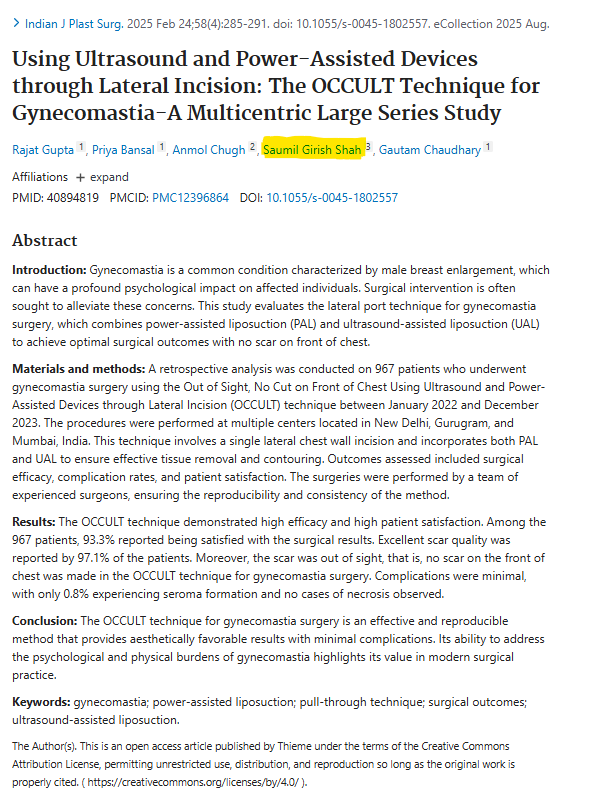
The technique described on the current page is associated with a published study titled “Using Ultrasound and Power-Assisted Devices through Lateral Incision: The OCCULT Technique for Gynecomastia — A Multicentric Large Series Study.”
Patients interested in the technique can review the published study as part of their treatment research.
Why Do Patients Consider Scarless Gynecomastia Surgery?
Gynecomastia can affect the appearance of the male chest even when a person exercises regularly and maintains a healthy body weight.
Patients may consider surgical correction because of:
Enlarged male breasts
Excess chest fat
Glandular breast tissue
Difficulty achieving a flatter chest through exercise alone
Chest asymmetry
Self-consciousness about the chest
Desire to wear fitted clothing comfortably
Preference for discreet surgical access and minimal visible scarring
The appropriate surgical approach depends on whether the enlargement is primarily caused by fat, glandular tissue, or a combination of both.
Who Is a Candidate for the Occult Technique?
The Occult Technique may be considered for selected men with mild to moderate gynecomastia.
Potential candidates may include men who:
Have mild to moderate male breast enlargement
Have fatty or glandular chest enlargement
Maintain a relatively stable weight
Are in suitable general health for elective surgery
Prefer a minimally invasive approach
Want to minimize the visibility of surgical scars
Have realistic expectations about the outcome
The current technique may not be appropriate for every type or severity of gynecomastia.
During consultation, Dr. Saumil Shah can assess the amount of fatty and glandular tissue and determine whether the Occult Technique is suitable.
Gynecomastia: Fat vs Glandular Tissue
Understanding the cause of male breast enlargement is important when planning surgery.
Predominantly Fatty Gynecomastia
When excess fat is the primary contributor to chest enlargement, liposuction may be used to reduce the excess tissue and improve chest contour.
Glandular Gynecomastia
When firm glandular tissue is present beneath the nipple-areola area, liposuction alone may not adequately address the enlargement. Glandular tissue may therefore need to be removed through a small access point.
Combined Fat and Glandular Gynecomastia
Some patients have both excess fat and glandular tissue. In such cases, a combination of liposuction and glandular tissue removal may be required to achieve a flatter and more proportionate chest.
Why Consider the Occult Technique?
The current technique is designed around several features that may be particularly relevant to patients concerned about visible surgical marks.
Small Access Points
The current practice information describes access points of approximately 3–4 mm.
Discreet Incision Placement
The access points are positioned in less conspicuous areas such as natural chest creases or near the underarm region, according to the current treatment description.
Treatment of Fat and Glandular Tissue
The technique can combine liposuction with micro-excision of glandular tissue when required.
Chest Contouring
The objective is not simply to remove tissue but to create a flatter, more proportionate male chest contour.
Short Initial Recovery
The current page states that patients may return to light activities within approximately 2–3 days, although individual recovery can vary.
How Does the Occult Technique Work?
The procedure generally involves several stages.
Preoperative Assessment
The chest is examined to determine the amount and distribution of fatty and glandular tissue. The surgeon also evaluates chest symmetry and the areas requiring contour correction.
Anaesthesia
According to the current practice information, the procedure may be performed under local or general anaesthesia, depending on the surgical plan.
Small Access Incisions
Small access points, approximately 3–4 mm according to the current page, are created in discreet locations.
Liposuction
High-definition liposuction is used to remove excess fatty tissue and improve the overall chest contour.
Glandular Tissue Removal
When glandular tissue contributes to the enlargement, micro-excision can be performed through the small access point.
Chest Contouring
The chest is carefully sculpted to create a flatter and more natural-looking contour.
Closure and Postoperative Care
The small access points are closed and postoperative instructions are provided, including guidance regarding compression and activity.
The complete procedure is described on the current page as typically taking approximately 60–90 minutes.
Occult Gynecomastia Surgery Scars
One of the main reasons patients consider the Occult Technique is the emphasis on minimizing visible scarring.
The current treatment description states that access points are approximately 3–4 mm and positioned in discreet locations such as natural chest creases or underarm areas.
However, it is important to understand that “scarless” does not mean that the skin undergoes no incision at all.
Small scars can still form as the access points heal. Their final visibility varies depending on individual healing, skin characteristics, incision placement and postoperative scar maturation.
The objective of the Occult Technique is to make these access points as discreet as possible.
Recovery After Occult Gynecomastia Surgery
Recovery is generally shorter than many patients expect, although the exact timeline depends on the extent of correction and individual healing.
First Few Days
Mild swelling, soreness or bruising may occur around the treated chest. Patients should follow the postoperative instructions provided by the surgical team.
Around 2–3 Days
The current page states that patients may be able to resume light activities within approximately 2–3 days. This does not necessarily mean that strenuous exercise or heavy lifting can be resumed at this stage.
First 2–3 Weeks
A compression garment is recommended according to the current treatment information for approximately 2–3 weeks. The garment helps support the treated area while the skin and underlying tissues adapt to the new contour.
Around 4–6 Weeks
The current page states that final results become visible around 4–6 weeks, as swelling settles and the chest contour continues to refine. Individual healing can take longer.
Results of Occult Scarless Gynecomastia Surgery
The objective of the procedure is to create a flatter, more defined and proportionate male chest.
Patients may notice an improvement in chest contour immediately after surgery, although swelling can temporarily affect the appearance. As healing progresses, the chest gradually becomes more defined.
The final result depends on:
Amount of fat removed
Amount of glandular tissue present
Skin elasticity
Chest anatomy
Surgical technique
Individual healing response
Postoperative care
Maintaining a relatively stable weight can help preserve the overall contour over time.
Occult Technique vs Traditional Gynecomastia Surgery
The main distinction is the approach to surgical access.
Occult Technique
The technique uses small, discreet access points and combines liposuction with micro-excision of glandular tissue when required.
Traditional Approach
Some conventional gynecomastia procedures may require larger or more visible incisions, particularly when significant glandular tissue or excess skin needs to be removed.
The appropriate approach depends on the severity and type of gynecomastia.
Patients with more significant skin excess or severe glandular enlargement may require a different surgical technique.
Can the Occult Technique Treat Severe Gynecomastia?
The current page specifically positions the Occult Technique for mild to moderate gynecomastia.
Patients with more significant glandular enlargement, substantial excess skin or advanced chest laxity may require a different surgical approach.
A physical examination is therefore important before deciding which technique is appropriate.
Risks & Considerations
As with any surgical procedure, gynecomastia surgery has potential risks and complications. These may include:
Swelling
Bruising
Bleeding
Infection
Changes in sensation
Asymmetry
Contour irregularities
Fluid accumulation
Scar formation
Need for revision surgery in selected cases
Although the Occult Technique is designed to minimize visible scarring, no surgical technique can guarantee that scars will be completely invisible.
The potential risks and expected benefits should be discussed with your plastic surgeon before proceeding.
Why Choose Dr. Saumil Shah for Occult Gynecomastia Surgery in Mumbai?
Gynecomastia surgery requires careful assessment of the relationship between fatty tissue, glandular tissue, skin quality and chest proportions.
Plastic Surgery Expertise
Dr. Saumil Shah is a Plastic, Aesthetic & Reconstructive Surgeon in Mumbai. His qualifications and training include:
MBBS – KEM Hospital, Mumbai
MS in General Surgery – M.S. University
MCh in Plastic Surgery – Sion Hospital (LTMMC), Mumbai
Focus on Male Chest Contouring
The surgical goal is to create a flatter and proportionate chest rather than simply removing the maximum possible amount of tissue.
Occult Technique
Dr. Saumil Shah offers the Occult approach described on the current page for selected patients with suitable gynecomastia.
Personalized Treatment Planning
The surgical plan is based on:
Fat distribution
Glandular tissue
Skin quality
Chest proportions
Degree of gynecomastia
Desired contour
Patient Safety & Surgical Care
The existing practice information highlights:
Nerve blocks to help manage postoperative discomfort
DVT pumps to help reduce the risk of blood clots
Warmers to help maintain body temperature
Appropriate surgical and postoperative monitoring
Follow-up care during recovery
Procedures are performed in a NABH-accredited hospital, according to the current practice information.
Transparent Treatment Guidance
Patients can discuss the surgical technique, expected scar placement, recovery, risks, results and treatment costs before deciding to proceed.
Occult Scarless Gynecomastia Before & After
Before-and-after photographs can help patients understand the type of chest contour improvement that may be possible following gynecomastia surgery. The current page includes multiple before-and-after examples showing male chest contour changes following gynecomastia treatment.
Individual results vary according to:
Severity of gynecomastia
Amount of fatty and glandular tissue
Skin elasticity
Chest anatomy
Surgical technique
Healing response
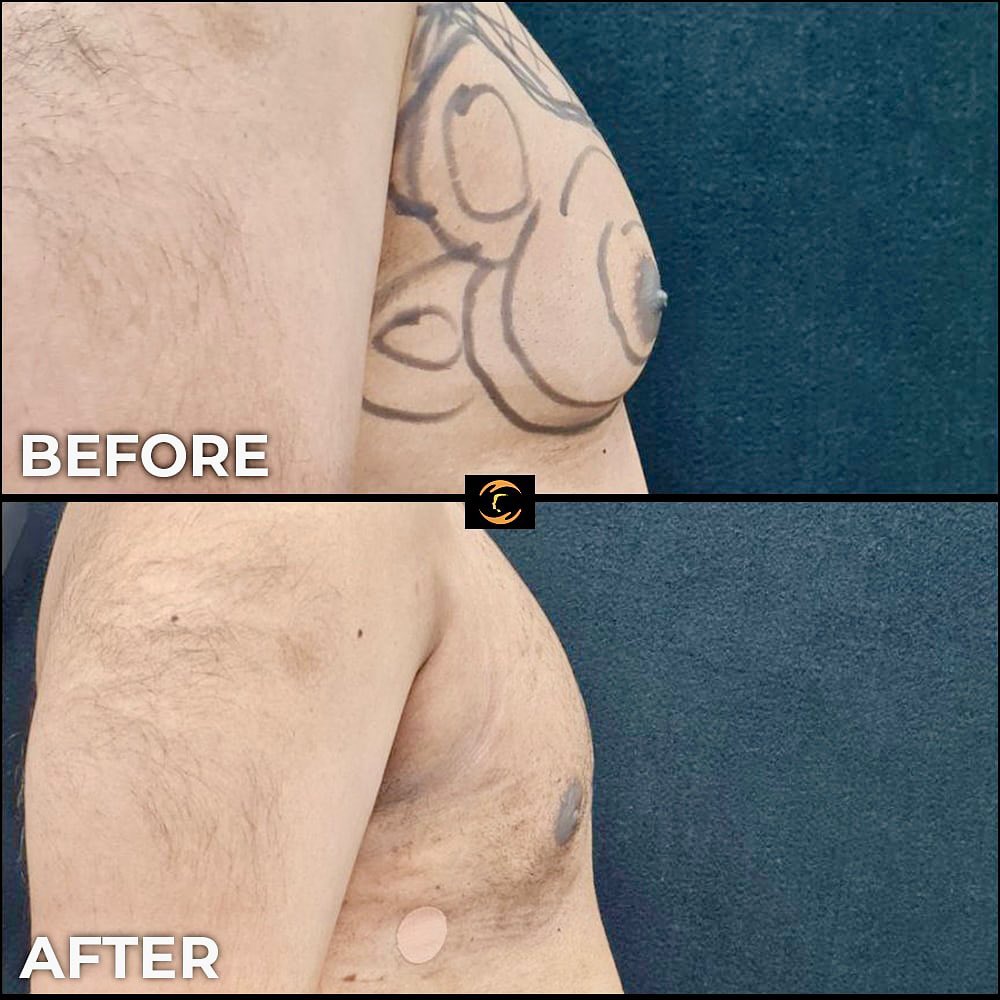
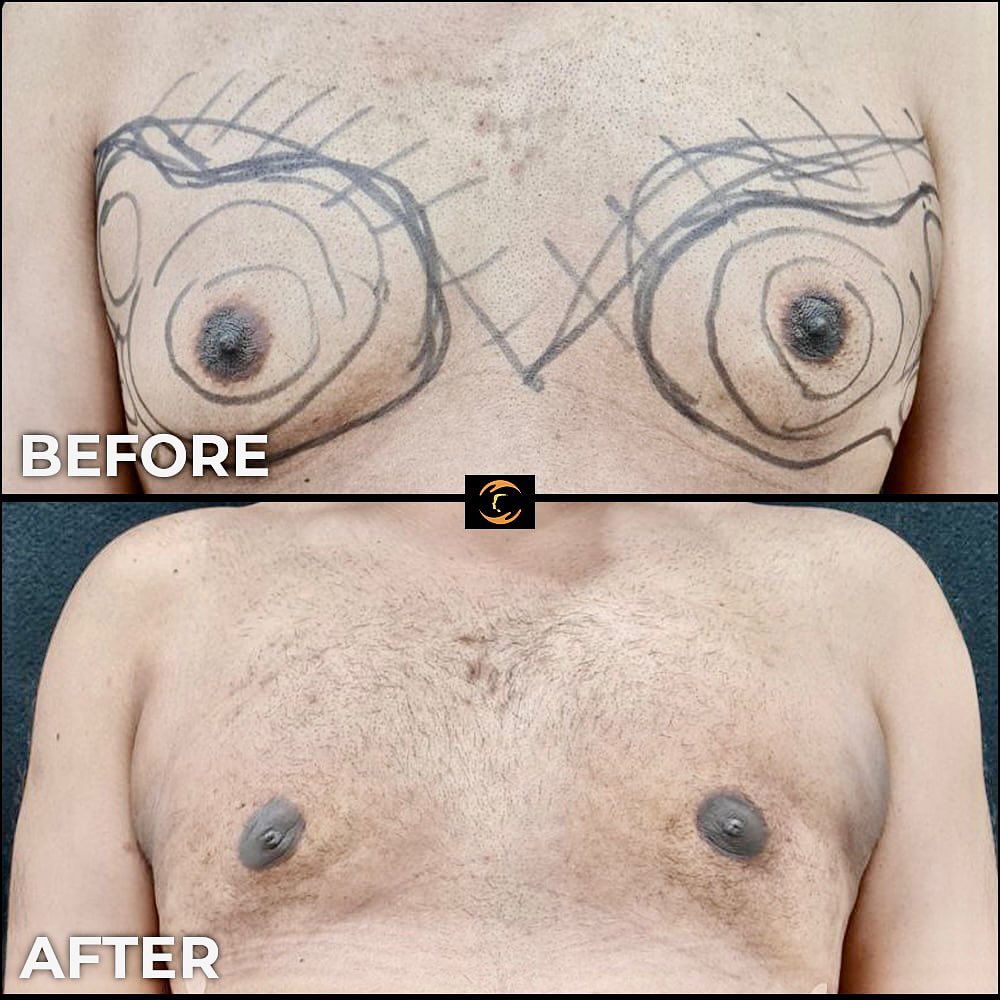
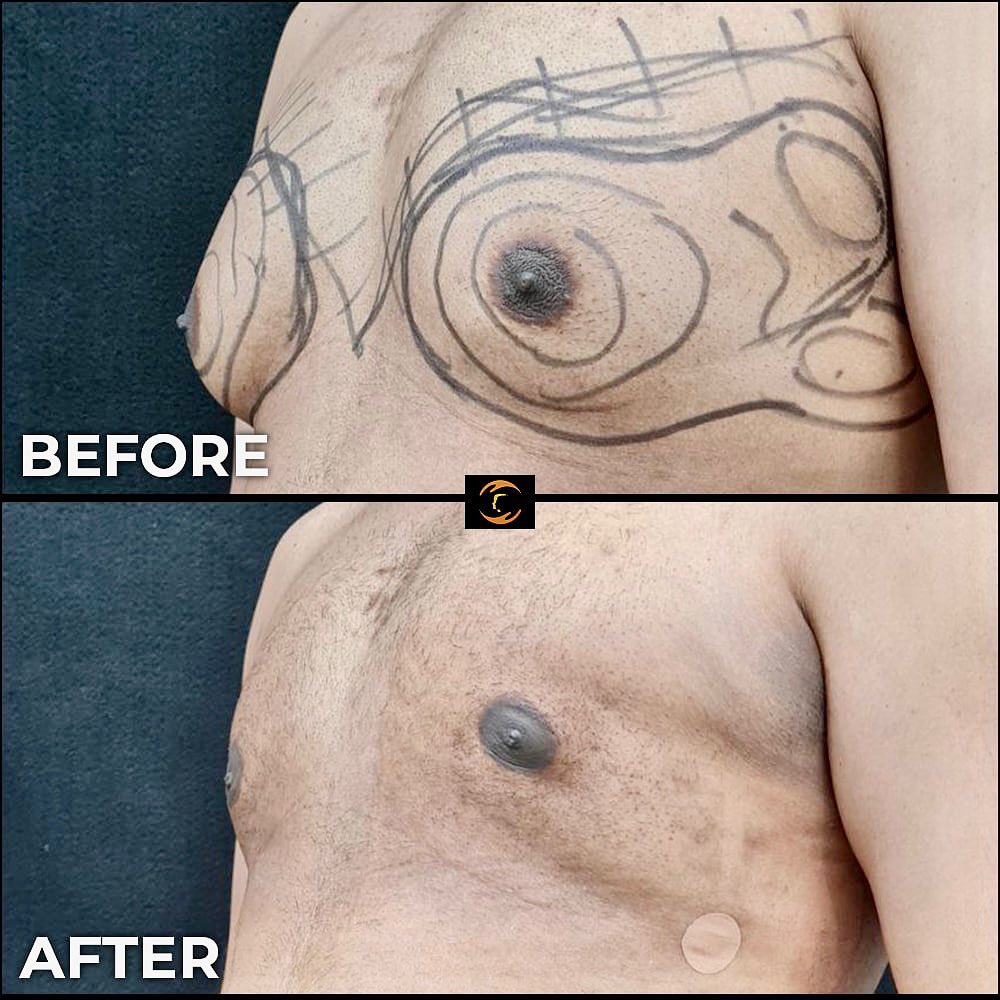
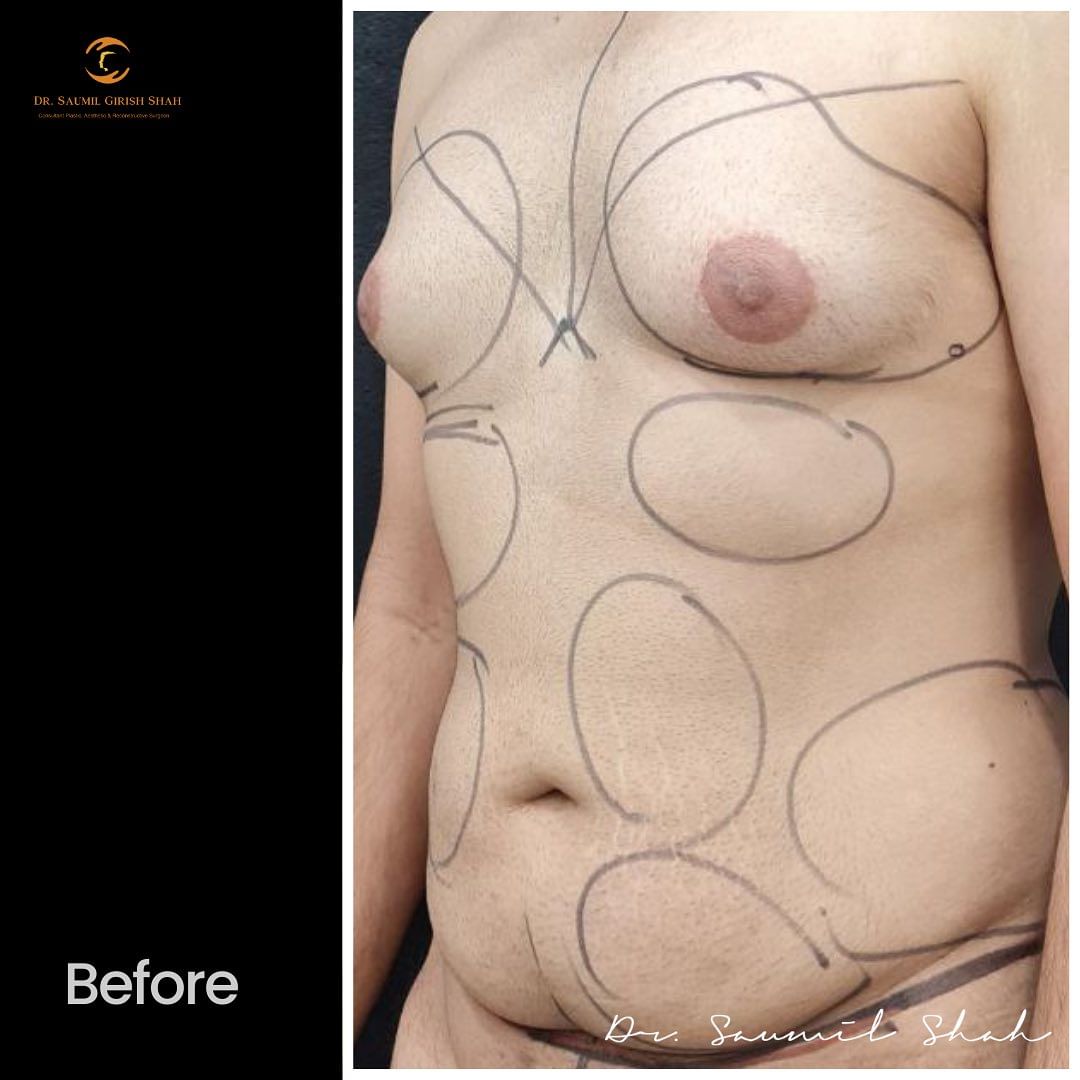
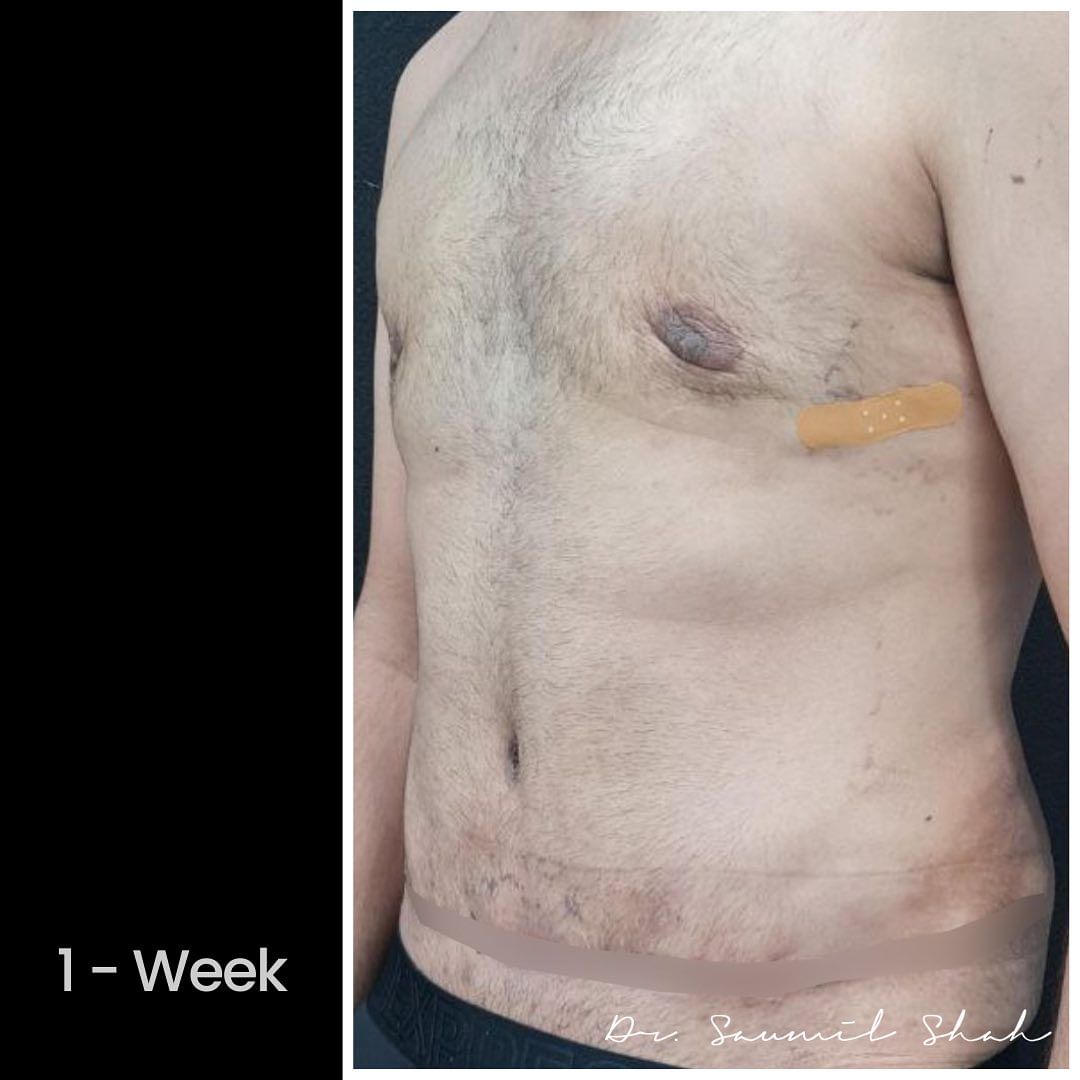
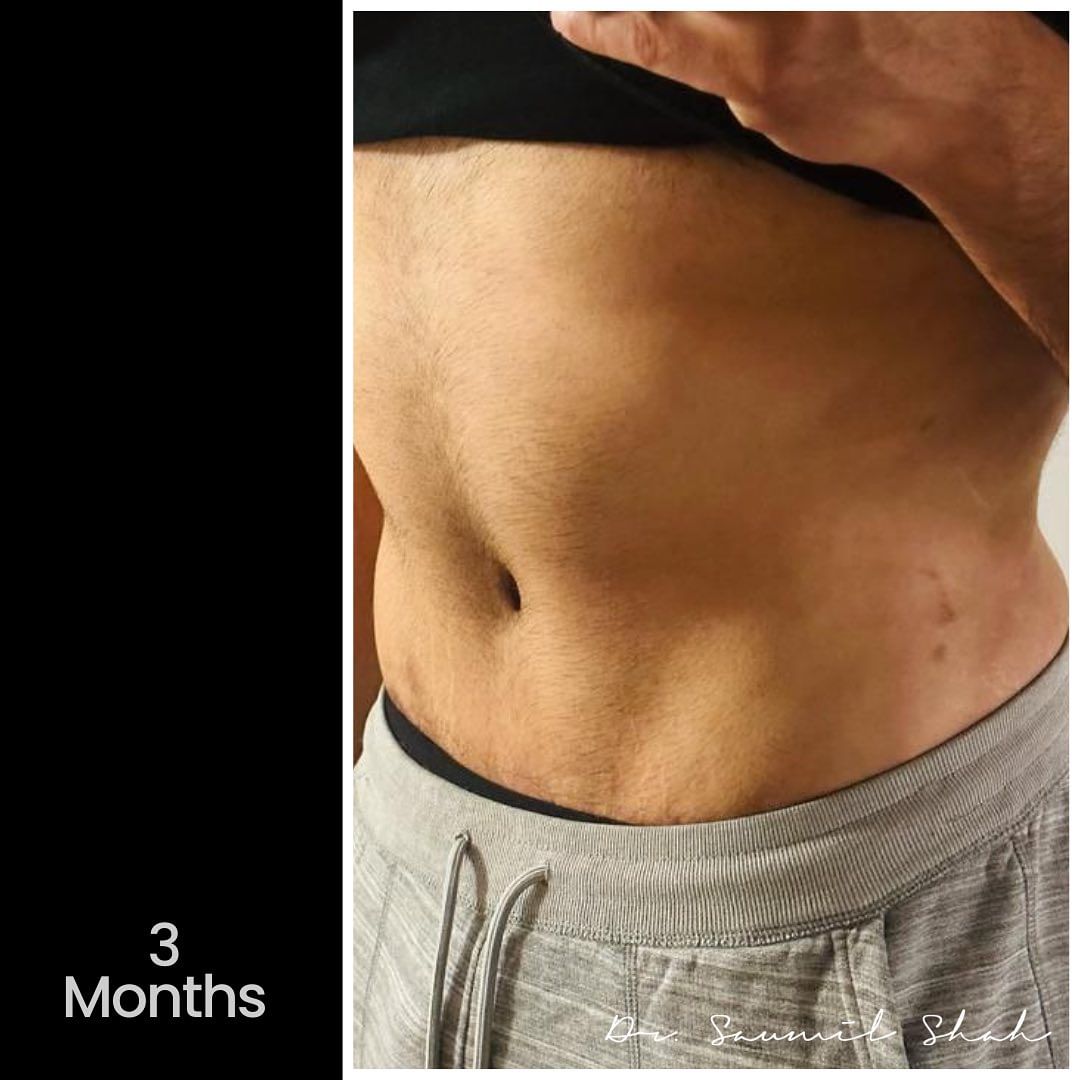
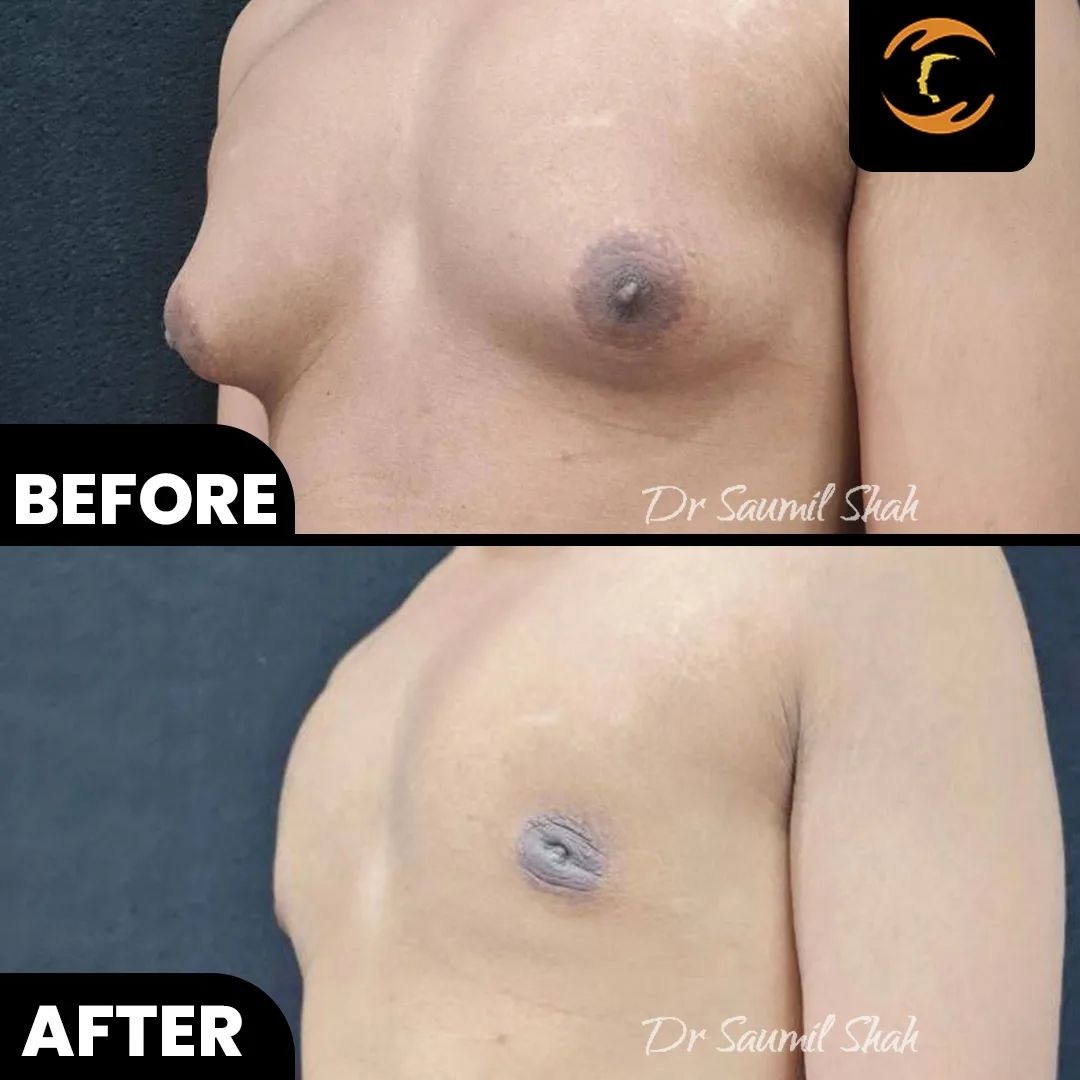
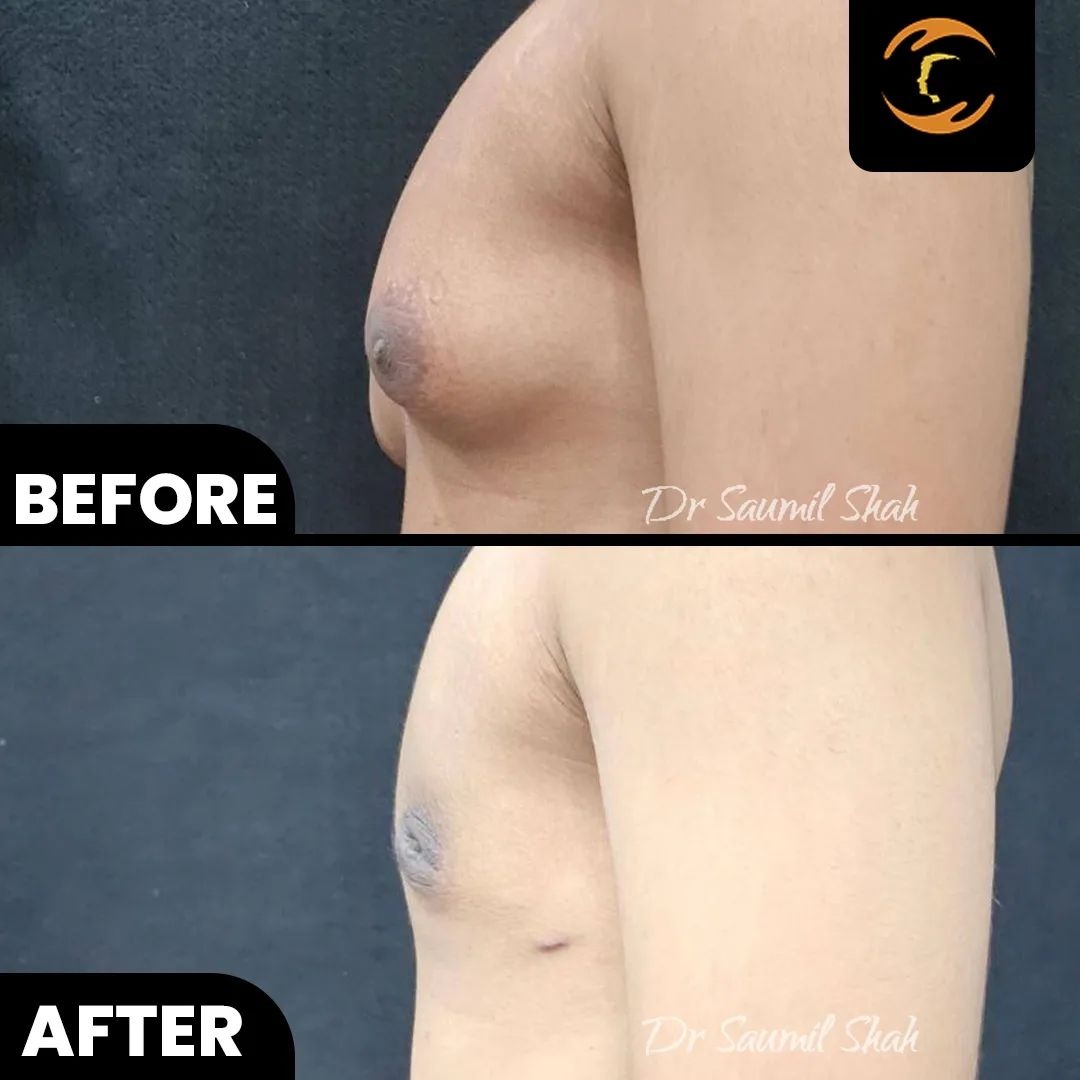
Before-and-after photographs should therefore be viewed as examples rather than guarantees of an identical result.
Occult Gynecomastia Surgery Research
The current page references the published study:
Patients who want to understand the technique in greater detail can review the published research during their treatment decision-making process.
The research reference is particularly useful for establishing the technical background of the OCCULT approach rather than relying solely on promotional descriptions.
Take the Next Step
If male breast enlargement is affecting your confidence or making you uncomfortable with your chest appearance, a consultation can help determine the cause of the enlargement and the most appropriate treatment approach.
Dr. Saumil Shah can assess whether your gynecomastia is primarily fatty, glandular or a combination of both and discuss whether the Occult Technique is suitable for you.
During consultation, you can discuss:
Whether you are a candidate for the Occult Technique
Fat and glandular tissue removal
Expected scar placement
Recovery and compression garment
Potential risks
Expected chest contour
Treatment cost
Related Male Cosmetic Procedures
Depending on your individual concerns, you may also explore:
Each procedure addresses different concerns and should be selected according to individual anatomy and treatment goals.
Our other Cosmetic Surgery Services in Mumbai:
Gynecomastia Surgery in Mumbai | Tummy Tuck Surgery in Mumbai | Liposuction Surgery in Mumbai | Breast Augmentation Surgery In Mumbai | Breast Reduction Surgery in Mumbai | Rhinoplasty in Mumbai | Brazilian Butt Lift Surgery in Mumbai | Botox Treatment in Mumbai | Derma Filler Treatment in Mumbai | Thread Lift Surgery in Mumbai | Eye Brow Lift Surgery in Mumbai | Lip Augmentation Surgery in Mumbai | Neck Lift Surgery in Mumbai | Lower Body Lift Surgery in Mumbai | Upper Body Lift Surgery in MumbaiDr. Saumil Shah, a Board-Certified Plastic Surgeon in Mumbai, specializes in Rhinoplasty, Facelift, Breast Surgery, Tummy Tuck, and Liposuction, known for delivering consistent, excellent results.
© Dr. Saumil Shah | All Rights Reserved